
This post may not have a point to it, but that’s the point.
I’ve been writing since I was a kid. Like many kids, I wrote stories — sometimes for school, sometimes just to amuse my siblings or to get something off my chest about them that I couldn’t express directly because they were older and bigger, and I was small, little, younger, less powerful.
After we got a new piano in our house, the nine-year-old I was at the time wrote a little  four-line story in landscape format using red marker on a piece of tablet paper about how my big brother was always “playing on” the piano and leaving no time for anybody else to play it, and how I “can’t stand him” because of it.
This must have been a particularly prolific writing period for me, because around the same time, I won a third-grade contest for a short poem I wrote about what I loved most about going to elementary school — stopping at the candy store on the way to school every morning to stock up on the requisite sugar needs for the day.
I wrote because I was driven by a feeling I desperately needed to express, an assignment I had to finish, or some intangible reward, like a satisfying reaction from a sibling. AKA the payoff.
Eventually, as every writer does, I eventually struggled with what is commonly known as writer’s block — the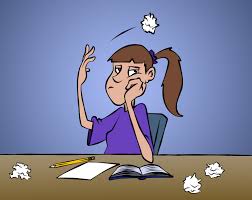 ongoing mythical experience of simply being otherwise unable to put pen to paper, at least with any viable output.
Lately, I’m hearing that there is no such thing as writer’s block. That’s something I can really get my head around. That’s something I want to believe. That is something I hope is true.
Whether there is or isn’t such a thing as writer’s block, however, I see many parallels between that (writing, or finishing a piece of writing) and something I struggle with far less (exercise, or finishing a workout, as I wrote about here).
So I’m getting to the point of this NO POINT post.
I’m blocked. This visual (below) is what it feels like, and often this goes on for hours, days, weeks, I daresay even months or years.

That’s all I have to say. I am being called to procrastinate.
 Whether or not there’s any truth to that story, getting into a Mid-Sentence Hard Stop is a great way to create momentum for the next time you face the page. In the context of exercise, there may not be a direct “mid-sentence” equivalent, but sometimes I’ll leave my workout clothes out for the next morning so they’re ready to put on, or I’ll schedule the next day’s workout the night before (assuming I’m not attending a scheduled group class), all the way down to the minute.
 hey both improve tremendously with slight challenge increases. When you “hit a wall” in fitness, you either take a break (which also helps in writing) or increase the weight, time, any X challenge slightly. This way, you can keep the momentum going and also maintain enough challenge to keep from injuring yourself (i.e., giving up writing because it’s too hard) or from getting bored, with the same result.
 rt of the Type A personality’s culture of ambition and achievement. When there is a risk of seeing my momentum slip, another trick I use is to ask myself: “The time is going to pass anyway, so how will you wish you had spent it?”).
 The tour was led by an unusual character — a round older man with brown skin and a gravely monotone voice who said he was from the town. He spoke in a style mimicking the gusto and bawdiness of a vaudeville performer, yet his odd delivery belied an undercurrent of something mysterious in the otherwise casual history of the town.
 The education came from, well, pretty much everything I didn’t already know, plus one bit of unwelcome education (to be covered in a future post). The up-close-and-personal learning about zebras, elephants, cheetahs,


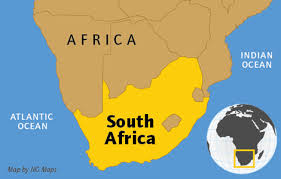 Johannesburg. Pretoria. Cape Town.
 Now, I’m going. Fifteen days in May, including two luxury trains, plus a couple of nights on the Zimbabwe side of Victoria Falls.
 y mind or in a childhood game and lasted only hours or a day. They were part of a business called Being a Kid, carried out with neighborhood friends, a schoolmate perhaps, where we pretended to be characters from the realm of popular culture.
 work see us differently than those who live with us, and differently than those who wait on us at a restaurant, store, bank, etc. Then there are those who maintain second selves, double lives, who carry on affairs, secret dalliances, and indecent activities. And there are those who consciously live in the shadows, hiding out, for the sole purpose of eluding authorities, aka outlaws.
 I find myself craving that time when I went by another name, presented myself to a small slice of the world as her, who couldn’t be found when she journeyed back to me.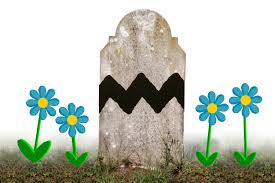


 Traverse: a travel diary